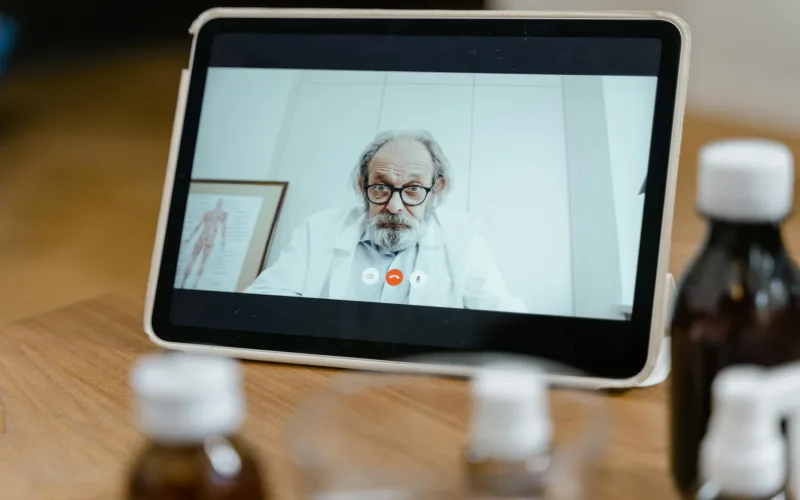

Telemedicine has exploded since 2020. In 2024, 67% of French practitioners offer remote consultations. This normalisation has redefined expectations around digital presence: a website is no longer just a storefront, it is an operational healthcare access tool. Yet this transformation also reveals a gap: whilst demand for telemedicine is strong (45% of patients prefer a first consultation remotely if possible), most practitioners still need to improve their technical infrastructure and compliance approach.
Technical infrastructure and service continuity
A video consultation requires reliable infrastructure. Insufficient bandwidth, server instability, or inadequate platform choice creates friction from the first consultation. Best practices include: a HIPAA‑compliant platform or equivalent regulatory standard, technical redundancy to prevent interruptions, and integration with the existing patient record system. A practice that mishandles this transition sees its digital reputation decline rapidly: a patient frustrated by a failed video consultation will not return.
Practitioners also overlook accessibility: a telemedicine platform must work on mobile (38% of video consultations in France are conducted from a phone), and patient documentation must be clear. A 2023 study found that 41% of patients abandon a teleconsultation if the access process exceeds three clicks.
Regulatory compliance and data management
Telemedicine accumulates complex regulatory requirements. In France: GDPR, medical confidentiality, ISO 27001 standard for health data, declaration to CNIL for external platforms. Many practitioners use consumer tools (Zoom, Teams) without measuring the regulatory risk. A non‑compliant platform can result in fines (up to 20 million euros for serious GDPR violations) and destroy patient trust.
Managing this compliance requires: an initial audit, clear process documentation, team training, and a maintenance plan. It is an ongoing investment, but it is the cost of a legal and sustainable operation.
Web presence and patient acquisition
Telemedicine also changes patient search behaviour. A GP who offers remote consultations attracts patients in underserved areas (low medical density) or mobile workers. But this requires an optimised web presence to communicate this offer: a site that explicitly mentions consultation modalities (waiting time, platform, pricing), patient reviews that validate video consultation quality, and easy online appointment booking.
Integration with patient records and clinical workflow
Genuine telemedicine digitalisation requires seamless integration with the electronic patient record (EPR). This allows the telemedicine platform to display patient history, facilitate prescription, and reduce administrative friction. The best practices have integrated this workflow; others still ask patients to recall their medical history at each consultation.
Outcomes and market dynamics
Telemedicine is no longer optional in modern medical practice. Practitioners who invested early in solid and compliant infrastructure capture a growing share of their market. For others, catching up demands time and resources that may not be available immediately.
The practices that have structured their digital presence around telemedicine are now the ones differentiating themselves from competitors who treat it as an afterthought.